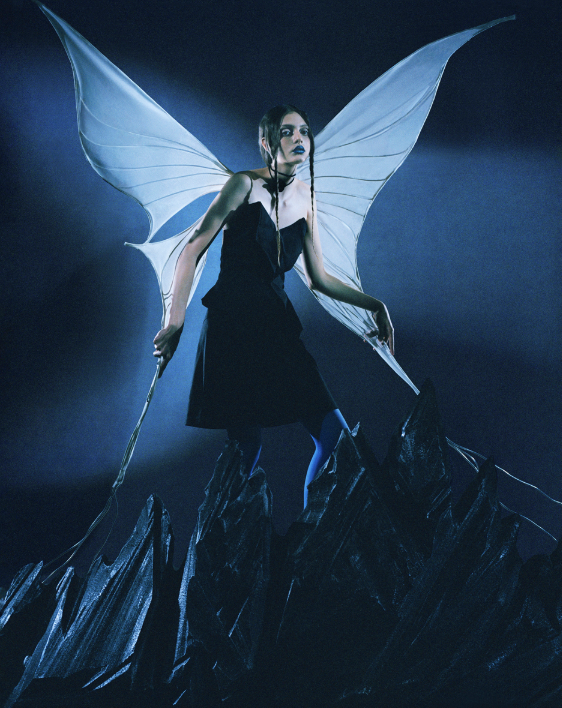
Inside the Extraordinary Visual World of Han Yang
Meet Han Yang: The Artist Behind the Images

by Timea Buknicz
September 30, 2026 | 10 min read
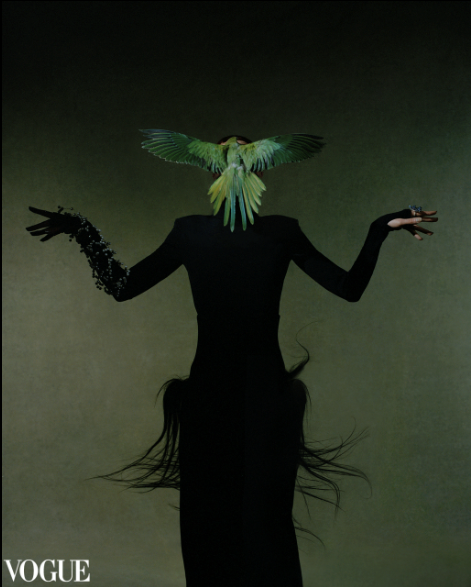
Long before I became a photographer, I was already collecting fashion magazines. Whenever we went to Italy, I would come home with these enormous magazines, and Paolo Roversi was one of the photographers whose work completely amazed me. I loved the colours, the textures, the softness, the choice of models, their eyes, the emotions, the vulnerability and that almost painterly feeling. I have always been drawn to darker images, with depth, shadow and atmosphere.
Apparently my taste hasn't changed that much.
When I found Han Yang's work, I was immediately drawn into her world. Her images have that beautiful place somewhere between fashion and fine art, but the more I learned about her and the way she creates them, the more interesting she became to me.
Some of Han's analogue photographs will be part of this year's Retoucher of the Year across multiple categories, but before we sit down with her for our own conversation, I wanted to introduce you properly to the person behind them.
 BACK
Photography was there long before it became her profession
Han grew up in China in a family of photographers, so cameras were part of her life from very early on.
One childhood memory in particular has stayed with her.
Her father once took her to a pond filled with lotus flowers and photographed her using different lenses and multiple exposures. In one final photograph, five different expressions of Han appeared together.
This was long before digital photography and Photoshop.
Speaking to Al Tiba9, Han remembered being fascinated by the “magic and enchantment” photography could create. Her father's love of traditional Chinese bird and flower painting and landscape photography also became part of the visual world she grew up around.
Photography, however, didn't immediately become her profession.
What followed was not a straight line, which perhaps makes her journey more interesting.
Han worked as a retoucher and video editor in Beijing between 2006 and 2008, then moved into documentary photography before establishing YANGHAN Photography Studio in 2009.
Years later, she continued her education in London, graduating with distinction from the MA Fashion Photography programme at London College of Fashion, University of the Arts London.
Her practice gradually moved beyond fashion photography too.
Between 2021 and 2024, Han undertook research at King's College London exploring the intersections of posthumanism, photography, gender, queer identity and the changing relationship between human and nonhuman subjects.
By this point, photography had become something much more personal than a profession.
Speaking to Our Culture in 2026, Han described eventually reaching a point where making images no longer felt optional.
“I don't feel that I chose photography; it chose me.”
Years earlier, OVERDUE Magazine asked whether she saw herself in her photographs.
Her answer was even simpler.
“Every picture is myself.”
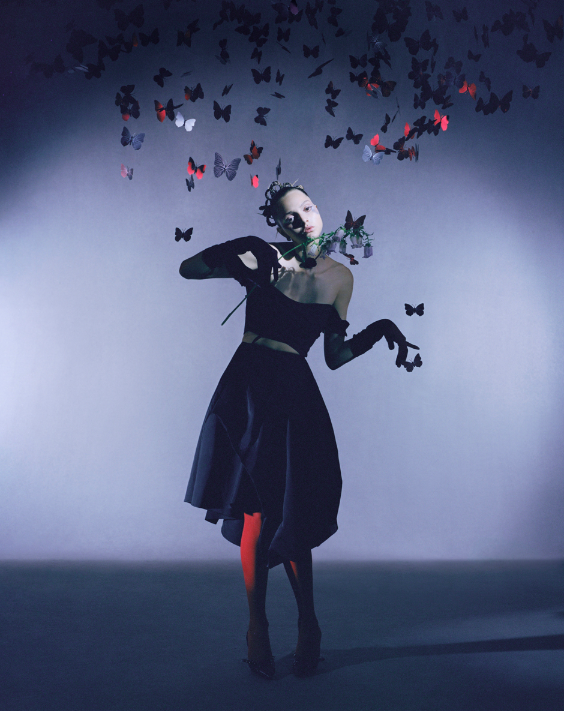
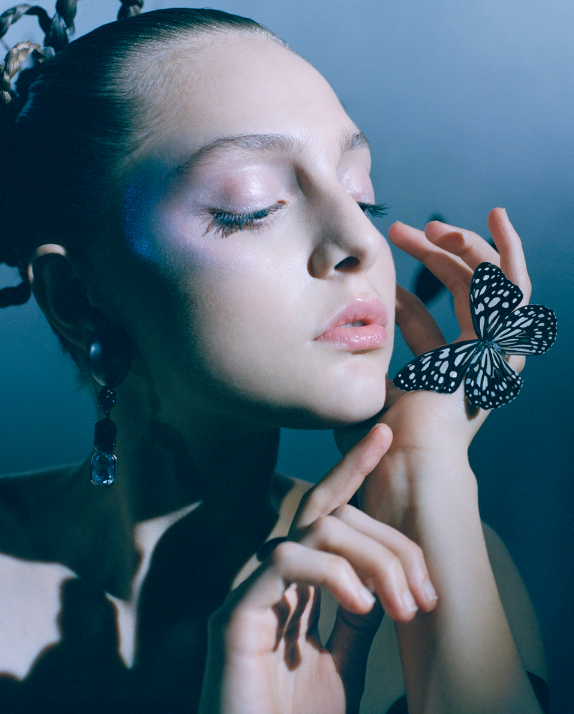
A career that refuses to stay in one box
Trying to describe Han simply as a fashion photographer becomes difficult quite quickly.
Her work has moved through fashion, portraiture, analogue photography, fine art, experimental photography and research. It has been exhibited internationally and featured extensively across photography, fashion and contemporary art publications.
Her exhibition history stretches back more than a decade and includes presentations in London, Paris, Milan, Venice, Athens, Rome, New York and cities across China, among others.
Her work has also received international photography recognition, including the FotoSlovo Awards, Julia Margaret Cameron Award, Fine Art Photography Awards, International Photography Awards, Tokyo International Foto Awards and other international competitions and exhibitions.
Yet the list of awards probably tells you less about Han than looking at how differently she approaches one project from the next.
Film can sit beside digital photography.
Fashion can sit beside fine art.
A human body can share the frame with organic matter, technology or something deliberately difficult to categorise.
Her work has incorporated photography, illustration, 3D modelling, animation, digital processes and living materials.
The technique changes.
The visual world remains recognisably hers.
Everything begins before the shutter
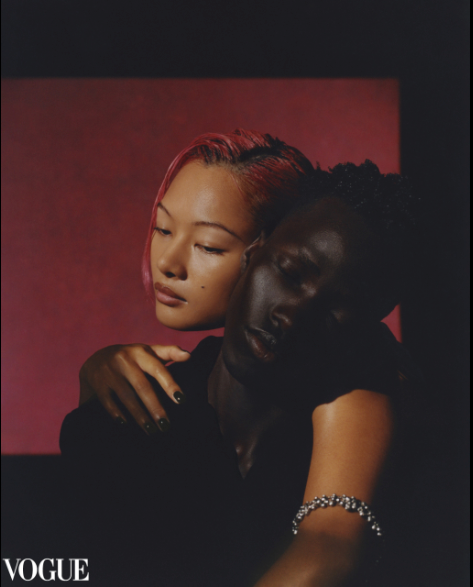
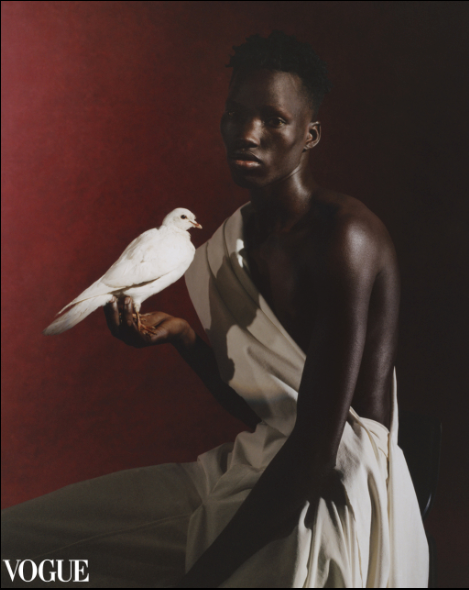
One thing that appears repeatedly when Han talks about her photographs is just how deliberately they are created.
She plans meticulously.
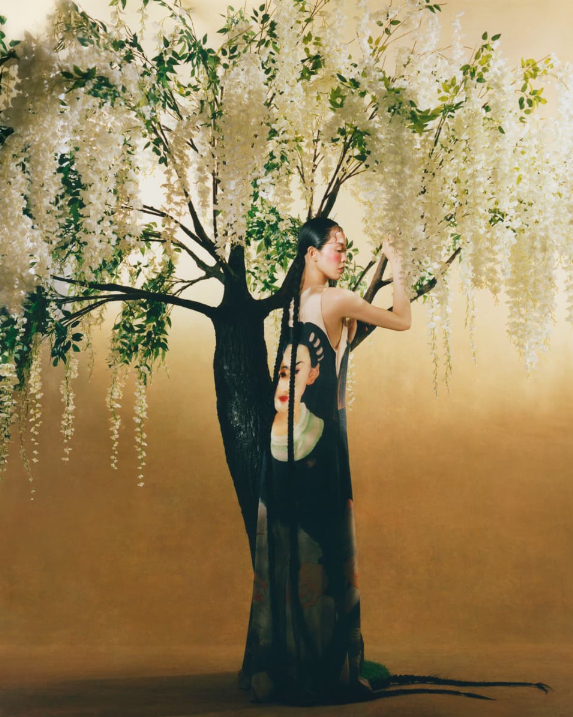
The lighting matters. The background colour matters. The relationship between colours matters. The textures matter. The proportions of objects matter.
Looking at the finished photograph, it would be very easy to assume that extensive post production had been involved.
It hadn't. Most of what we are looking at was already there.
I think there is something beautiful about that.
Not because one process is better than another, but because it makes you look again at the photograph and realise how much thought happened before you ever saw it.
“A good editorial comes from the effort and talent of a team”
That attention doesn't stop with Han herself.
When OVERDUE interviewed her about the editorial A Deep Blue Night, Han spoke about her collaboration with creative director Tess Savina.
They discussed the theme, model, make up, hair and styling before the shoot, sometimes discovering that they had independently chosen exactly the same outfit or reference image for the same reason.
Han described the experience with a lovely phrase:
“One plus one is greater than two.”
She followed it with something that perhaps explains her approach even better:
“A good editorial comes from the effort and talent of a team.”
The same attitude appears when she talks about working with models.
She has a story and an atmosphere in mind, but if the model understands that world intuitively, she gives them space to interpret it.
If more direction is needed, she steps in.
For Han, the photographer carries a responsibility towards everyone who has brought time, energy and talent to the shoot. Her job is to bring those individual contributions together without losing the story they set out to create.
Perhaps that is why the details in her photographs feel so considered.
They belong to the same world.
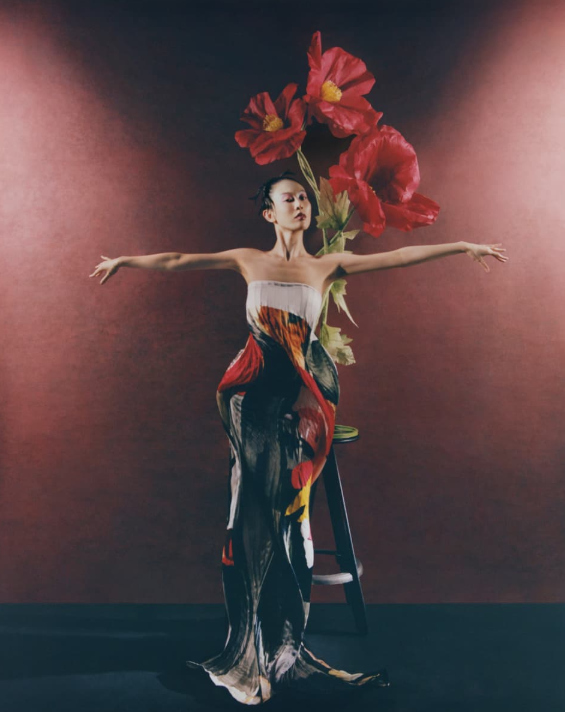
Colour as emotion
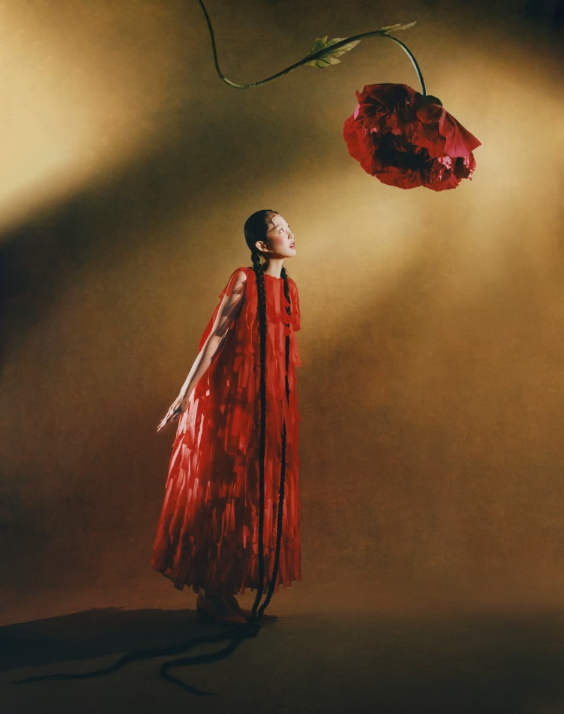
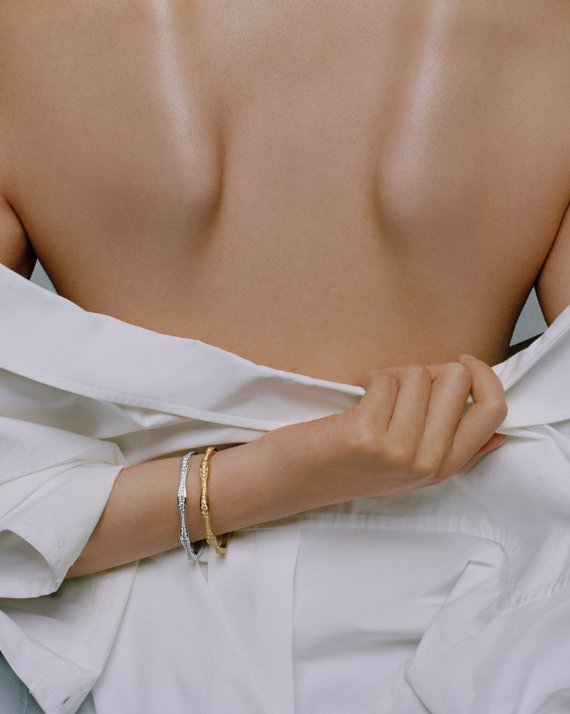
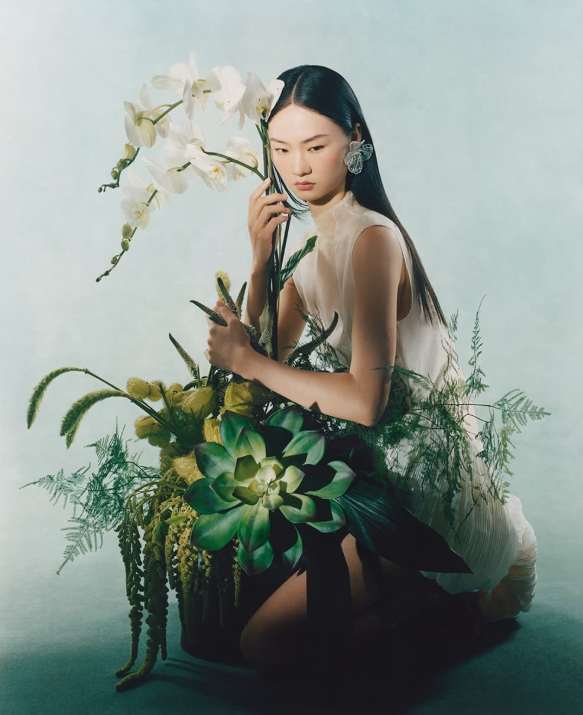
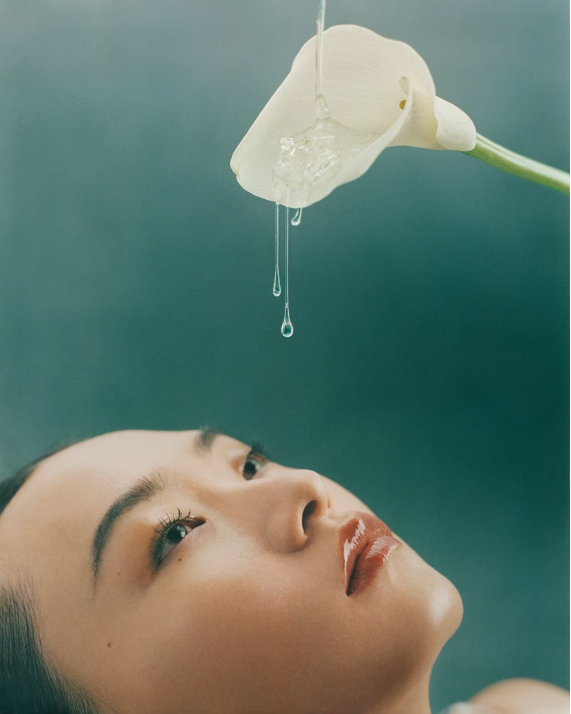
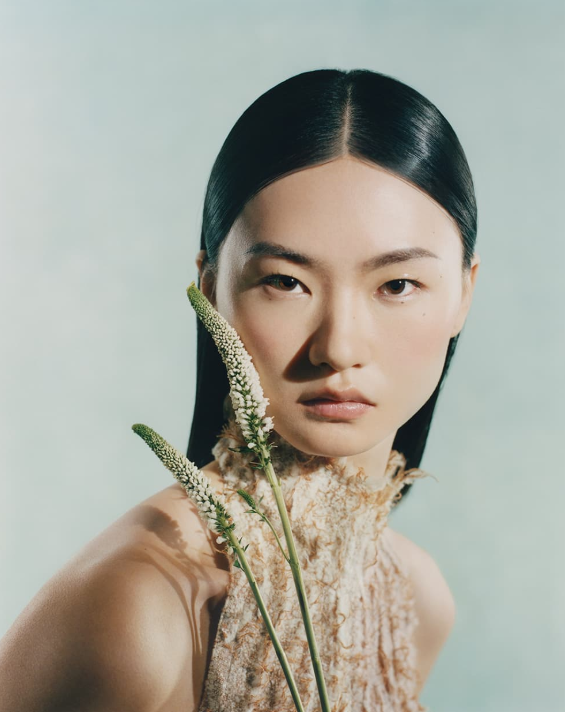
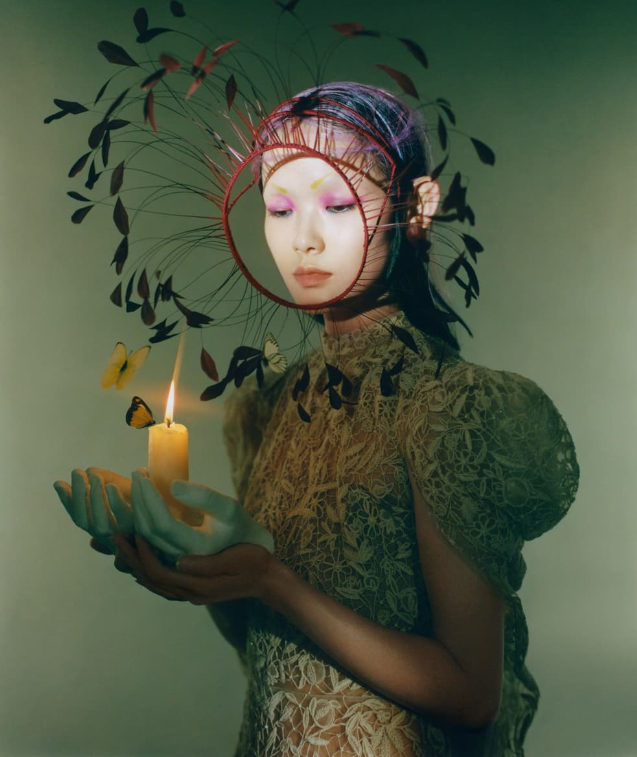
Colour is impossible to ignore in Han's photographs.
There are intense reds, blues, pinks and unexpected combinations, yet even her strongest colours rarely seem to overpower the image.
That balance is deliberate.
Speaking to Our Culture, Han described herself as particularly sensitive to very small differences in colour.
For her, vivid colour can carry intensity, desire and presence. Softer colour can introduce fragility, silence and distance.
She deliberately tempers stronger colours rather than allowing saturation itself to become the subject.
“I want colour to carry emotion without dominating the image.”
Fashion is part of the story
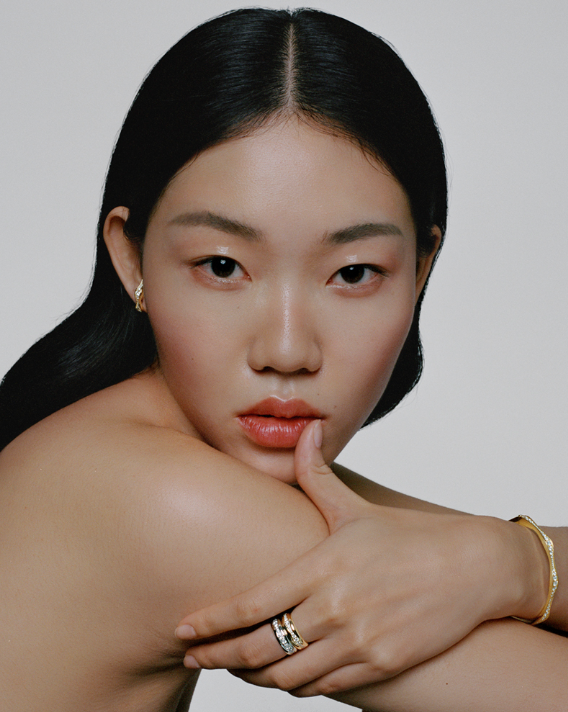
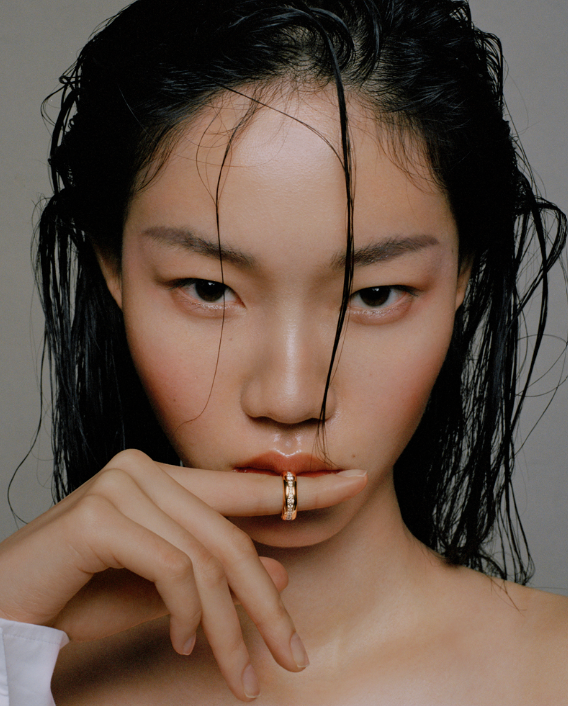
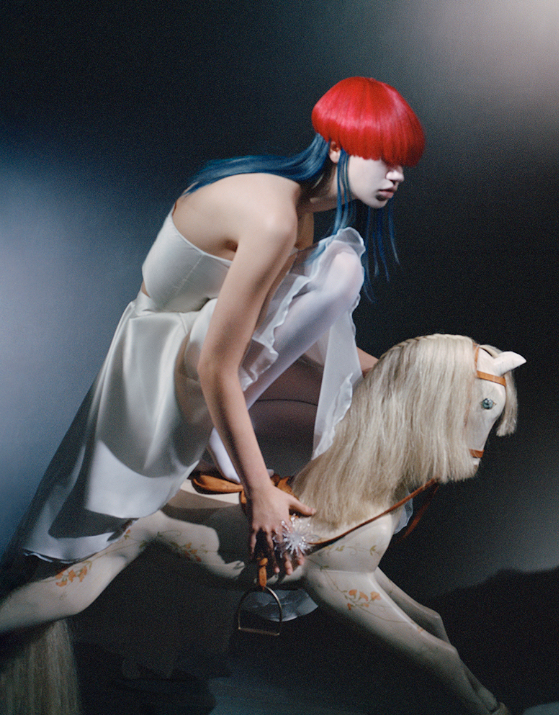
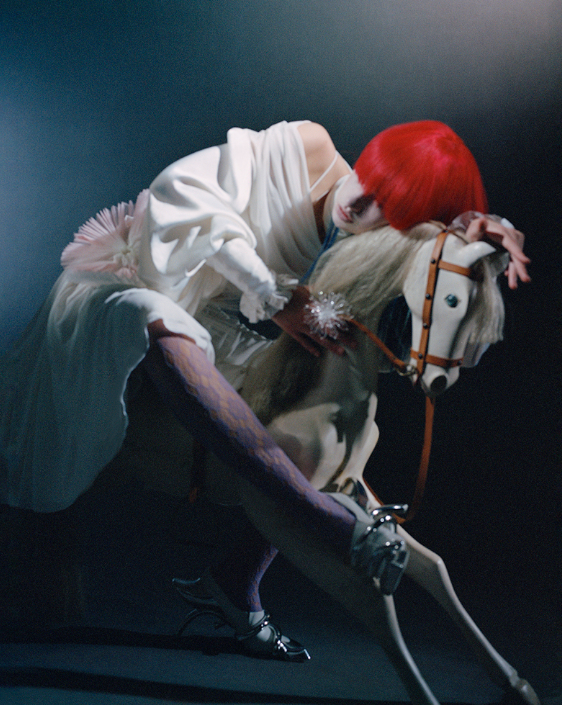
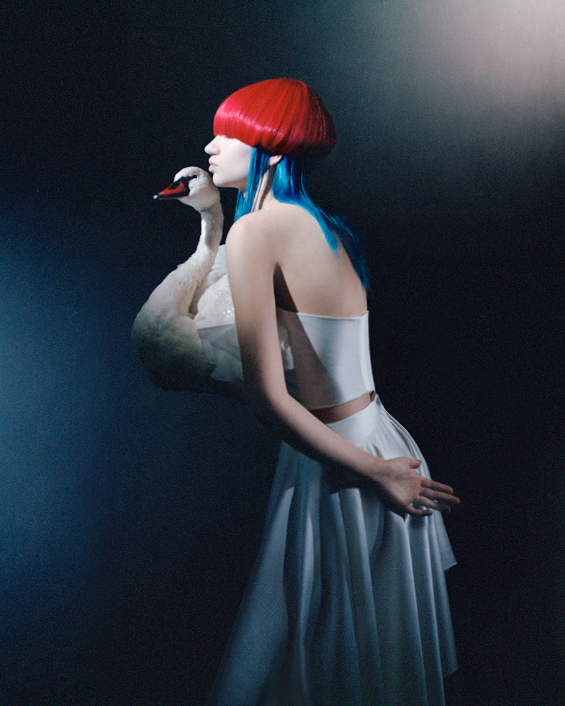
Fashion is clearly present in Han's work, but she doesn't treat clothing simply as decoration.
Speaking to Raandoom, she described fashion as a narrative tool.
A flowing fabric or organic form can communicate fragility or connection with nature. A rigid silhouette or metallic surface can suggest strength, artificiality or futurism.
The clothes therefore aren't simply there to be photographed.
They help tell the story.
Film, technology and everything in between
Looking only at Han's analogue work could give a completely wrong impression of her relationship with technology.
She isn't trying to recreate the past.
Her practice moves freely between traditional and contemporary processes.
Photography can sit alongside 3D modelling, illustration, digital imagery, animation and experimental technologies when the project calls for them.
Her research has taken that much further.
Questions around posthumanism led Han to explore what happens when the human being is no longer automatically treated as the centre of the photograph.
Sometimes her collaborators aren't human at all.
In some projects she has worked with mould as a living material, allowing temperature, humidity and time to influence what appears in the work.
Elsewhere, organic forms, animals, technological bodies and human figures occupy the same visual space.
The technology itself, however, never seems to be the entire point.
Han has explained that she chooses the technique according to the narrative of the project.
When the idea concerns digital identity or hybridity, technology may belong inside the work.
When she wants intimacy, vulnerability or nostalgia, she may return to film.
The story decides what it needs.
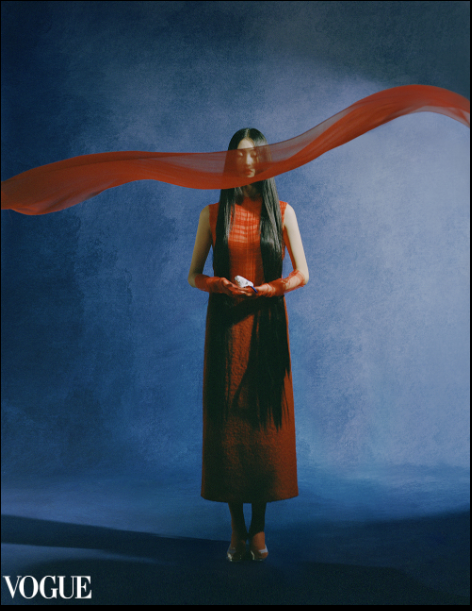
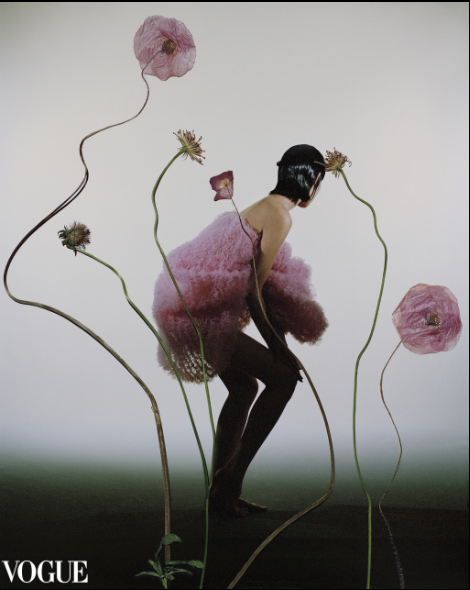
Somewhere between fashion and fine art
Perhaps this is why Han's work is difficult to place neatly into one category.
Fashion photography gave her one visual language, but her practice gradually expanded into questions around femininity, identity, gender, technology, queer experience, vulnerability and the relationship between humans and the world around them.
Those subjects can sound very academic when written down. The photographs don't.
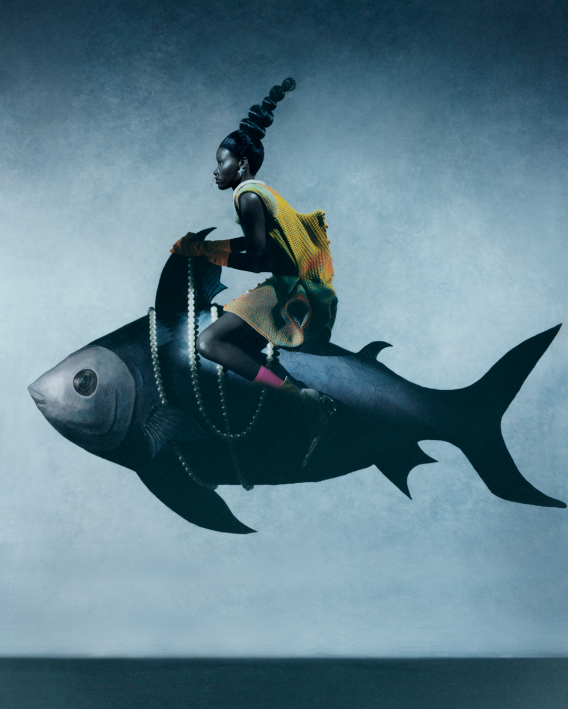
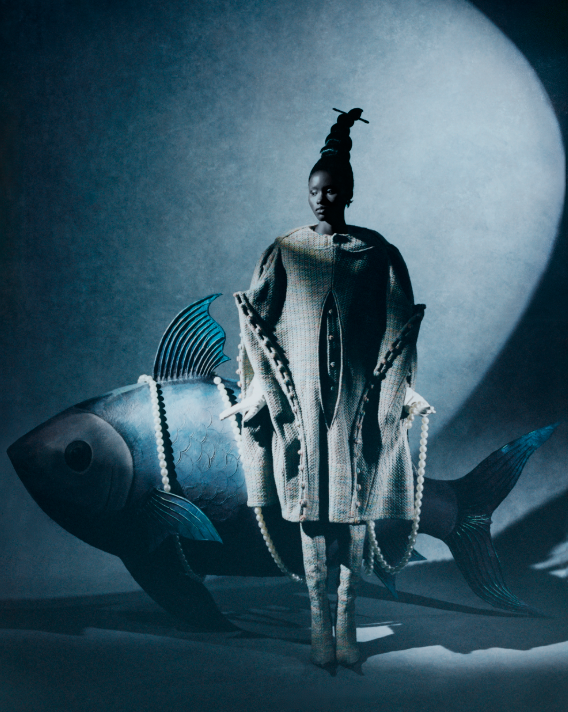
Before our conversation with Han
The more interviews I read, the more I realised that there are several different Han Yangs sitting inside the same practice.
The child fascinated by what her father could create with a camera, the retoucher, the documentary photographer, the fashion photographer, the analogue photographer working in the darkroom, the artist experimenting with technology and living materials, the researcher questioning where the human body belongs in an increasingly technological world.
Yet somehow the photographs still feel connected.
Soon, some of Han's photographs will be placed into the hands of our Retoucher of the Year participants.
Before that happens, we wanted to spend a little time with the person who created them.
We are absolutely thrilled that Han Yang has decided to participate in our project with her amazing images.
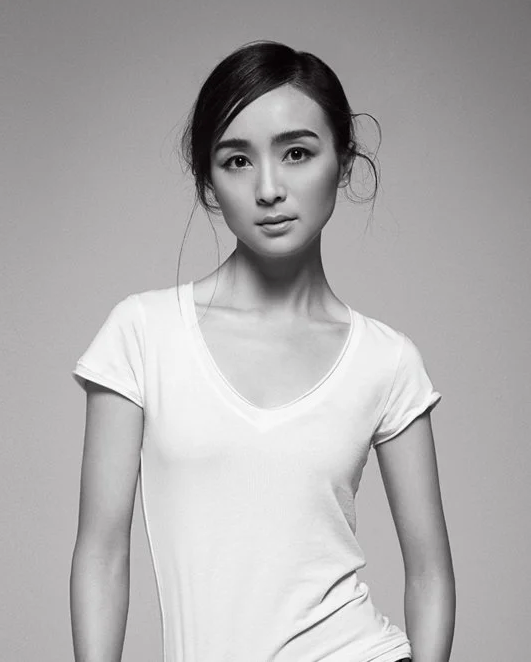
ABOUT HAN YANG
Han Yang is a London-based fashion photographer and visual artist known for her striking use of colour, texture and atmosphere. Moving effortlessly between analogue photography, fashion and fine art, her images have a distinctly painterly quality - bold yet delicate, contemporary yet timeless. Her work transforms fashion into visual storytelling, where every detail, from light and colour to fabric and form, plays a part in creating the mood.
FIND HAN
Instagram: @yanghanphoto
Website: www.yanghan-photo.com
Verified Retoucher Database
We are building a global, skill-verified retoucher database.
A platform where professional standards are documented, structured and transparent.
Skill-verified means professional standards are demonstrated, not claimed.Assessment is category-specific and based on structured test retouching.
Results are measured, scored and displayed transparently on each professional profile.
Secure early access and priority review ahead of public launch.