Meet the Participant
Sean McGrath

by Stephanie van der Stap
October 08, 2026 | 4 min read
As part of our Retoucher of the Year participant series, we're sharing the stories behind the people entering this year's competition.
For Sean, entering Retoucher of the Year isn't the culmination of a long career in retouching. It's part of the beginning of one.
Sean's background is in digital media and video editing, an area in which he is already building his business. Photo retouching represents a newer challenge and an opportunity to expand both his creative skills and the services he can offer.
Rather than waiting until he feels he has mastered the discipline before putting his work alongside others, Sean is taking the opposite approach. He is using the competition as part of the learning process itself.
For him, Retoucher of the Year is a chance to work with professional photography, test his developing skills against the same source material as more experienced retouchers, study how other people approach the challenge and discover what he can bring back into his own workflow.
 BACK
Testing Skills and Learning Through Competition
Could you tell us a little about yourself and how you got into retouching?
I actually didn't discover my love for digital content creation until quite late in my final year of college.
I had spent much of that year reviewing and understanding digital media, but it was the direct experience of editing a documentary that really changed things for me. There was something about actually putting the pieces together myself that made everything click.
I started out focusing on video editing, and that became the area where I began building my skills and business.
Photo retouching came next.
I'm still much newer to it, which is part of what makes it exciting. It's another way of working with visual material, but it requires a different kind of attention and a different way of thinking about the image.
Right now, I'm looking to improve those skills and see how far I can take them.
What made you decide to enter Retoucher of the Year this year?
A friend in the video editing business recommended Retoucher of the Year to me, specifically because of the categories for newcomers.
My video editing business continues to expand, but launching into photo retouching has been a greater challenge. I saw the competition as an opportunity to put myself into a situation where I would have to work with professional photography and really test what I've learned.
I'm grateful for the opportunity to hone my skills and have my work seen by professionals with years of wisdom and experience to share.
For me, entering isn't about pretending I'm already at the end of that journey.
It's about giving myself a reason to move further along it.
How would you describe your retouching style, and do you think it will show in your competition image?
My approach isn't about smothering every blemish or imperfection in an image.
It's more about showing people what can be seen underneath those distractions.
That might mean dealing with a light glare or an overcast shadow so that the plain and honest vision of the product can come through more clearly.
I also try to think about how an image will work in different environments. I want a photograph to remain effective whether it's stretched across a billboard or placed into the corner of a mobile website.
That versatility is important to me.
The image still needs to communicate regardless of where or how somebody encounters it, and I trust that philosophy will show in how I approach the competition image.
What made Retoucher of the Year feel like a competition worth entering?
One of the things that appealed to me most was the opportunity to stand alongside more seasoned retouchers and compare our approaches using the same set of images.
That creates a really interesting learning opportunity.
If everyone starts with similar source material, you can begin to see how differently people interpret the same challenge. The technical decisions may be different, but so can the creative ones.
I'm excited to see all of those approaches side by side.
For somebody who is still developing their own workflow, that's incredibly useful. I can look at what other retouchers saw in the image, what they prioritised and how they solved problems differently from me.
If I can take some of those ideas and use them to improve my own workflow, that's already valuable.
Does it feel intimidating to put your work beside people with much more experience?
Of course there is a challenge in that, but I think that's also the point.
If I only compare my work with what I already know, there isn't much pressure to grow.
Being able to work on the same challenge as people who have spent years developing their craft gives me a much clearer idea of where I am and what I still need to learn.
I don't expect to approach every image in the same way as somebody who has been retouching professionally for twenty years.
What interests me is understanding why our approaches are different.
That's where the learning happens.
Retouching is often invisible work. How do you feel about visibility and credit?
Credit has become an increasingly heated topic for generations of workers across every area of media.
Now we've reached a point where we're not only asking who created what we're looking at, but sometimes whether a human being had any hand in creating it at all.
That changes the conversation.
In the first few months of my own work, I went from sharing my results freely to watermarking my work on principle. I try to do it unobtrusively, using low contrast colours or minimal opacity, but I still want that connection between the work and the person who made it to exist.
Now more than ever, I think it's essential to be able to say with confidence, "This is what I can do. This is the product of what I have learned."
Entering this competition has only highlighted the importance of that commitment for me.
If you make something in the world today with your own hands, don't be afraid to say your name alongside it.
How do you think your background in video editing influences the way you approach a still image?
Video editing taught me to think about what the viewer actually needs to see.
You're constantly making decisions about attention, clarity and what contributes to the final result. Even though retouching is a different discipline, I think some of that thinking carries across.
With a still image, you don't have movement or time to guide the viewer. Everything has to work in that single frame.
That's one of the things I'm learning to appreciate about retouching. Small decisions can have a much bigger impact because the viewer has the opportunity to stay with the image.
Coming from another area of digital media also means I'm comfortable with the idea that there is always something new to learn. I'm not expecting the skills from one discipline to automatically make me good at another.
But they do give me a foundation to build from.
What are you hoping to learn from the other participants?
I'm particularly interested in seeing how different people solve the same problem.
There isn't necessarily one correct approach to an image. One retoucher may focus on something that another person barely touches, and both decisions may make sense within the final result.
That's what makes being part of a competition like this so interesting to me.
I want to see the different styles, techniques and priorities that emerge when people are given the same challenge.
If I finish the competition with new ideas about how to approach an image, or with additions to my own workflow that I wouldn't have discovered otherwise, then I've gained something useful.
You're planning to document your competition process. Why is that important to you?
I plan to create timelapses of my work during Retoucher of the Year and also share some photographs of my setup.
Part of the reason is simply that I think the process is interesting.
When you only see a finished image, it's easy to miss all of the smaller decisions that led to it. A timelapse can show how the work develops and how much happens between the source image and the final result.
For me, it will also create a record of where I am right now.
Because I'm still developing my retouching skills, being able to look back at that process later and see how my workflow has changed could be just as interesting as looking at the finished competition image itself.
When the competition is over, what would make you feel that entering was worthwhile, regardless of the result?
If, by the end of the competition, I can say that I've worked alongside talented creators and discussed new ideas and approaches to styling and retouching images, then I'll have found what I came looking for.
I want to expand the skills and services I can provide, test myself against professional photography and learn from the people participating alongside me.
That's the real goal.
Anything above that is a bonus.
A final note from us
There is something valuable about entering a competition before you feel completely ready.
Sean isn't approaching Retoucher of the Year with decades of retouching experience behind him. He is approaching it with curiosity, an existing foundation in another creative discipline and a willingness to put his developing skills into an environment where they can genuinely be tested.
That is precisely what the Rising Star level should make possible.
His perspective is also a reminder that comparison doesn't always have to be about ranking yourself against somebody else. When multiple people begin with the same source material, comparison can become a learning tool. You can see what another person noticed, what they ignored, what they changed and how differently they interpreted the same image.
Sean's goal is refreshingly straightforward. He wants to finish the competition knowing more than he did when he started.
And if he can look back at his own timelapses one day and see just how much his work has evolved since this competition, that may prove to be one of the most valuable results of entering.
We are delighted to welcome Sean McGrath as a participant in Retoucher of the Year 2026.
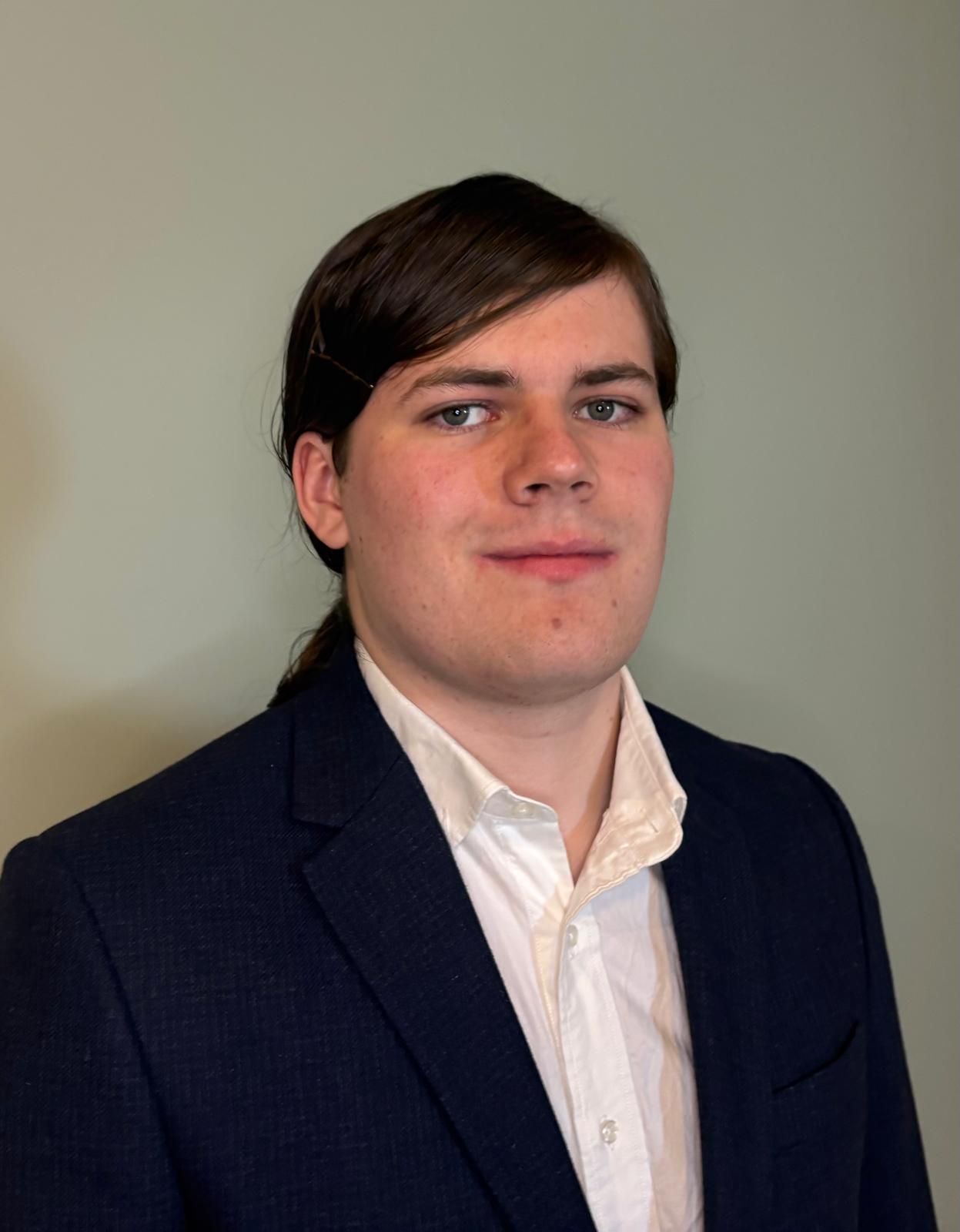
About Sean McGrath
Background: Digital Media and Video Editing
Current Focus: Developing his Photo Retouching Practice
Competition Goal: Expanding his Skills, Testing his Work and Learning from Other Retouchers
Website: soloist.ai/editingsmg
Verified Retoucher Database
We are building a global, skill-verified retoucher database.
A platform where professional standards are documented, structured and transparent.
Skill-verified means professional standards are demonstrated, not claimed.Assessment is category-specific and based on structured test retouching.
Results are measured, scored and displayed transparently on each professional profile.
Secure early access and priority review ahead of public launch.